
Home / Resources / Small Business CGT Concessions

Business Exit & Tax Planning

Selling your business? Understand the small business CGT concessions first.

The sale of a business or business asset can create a significant capital gain. For eligible Australian small businesses, special CGT concessions may reduce, disregard or defer some or all of that gain — but eligibility and timing matter.

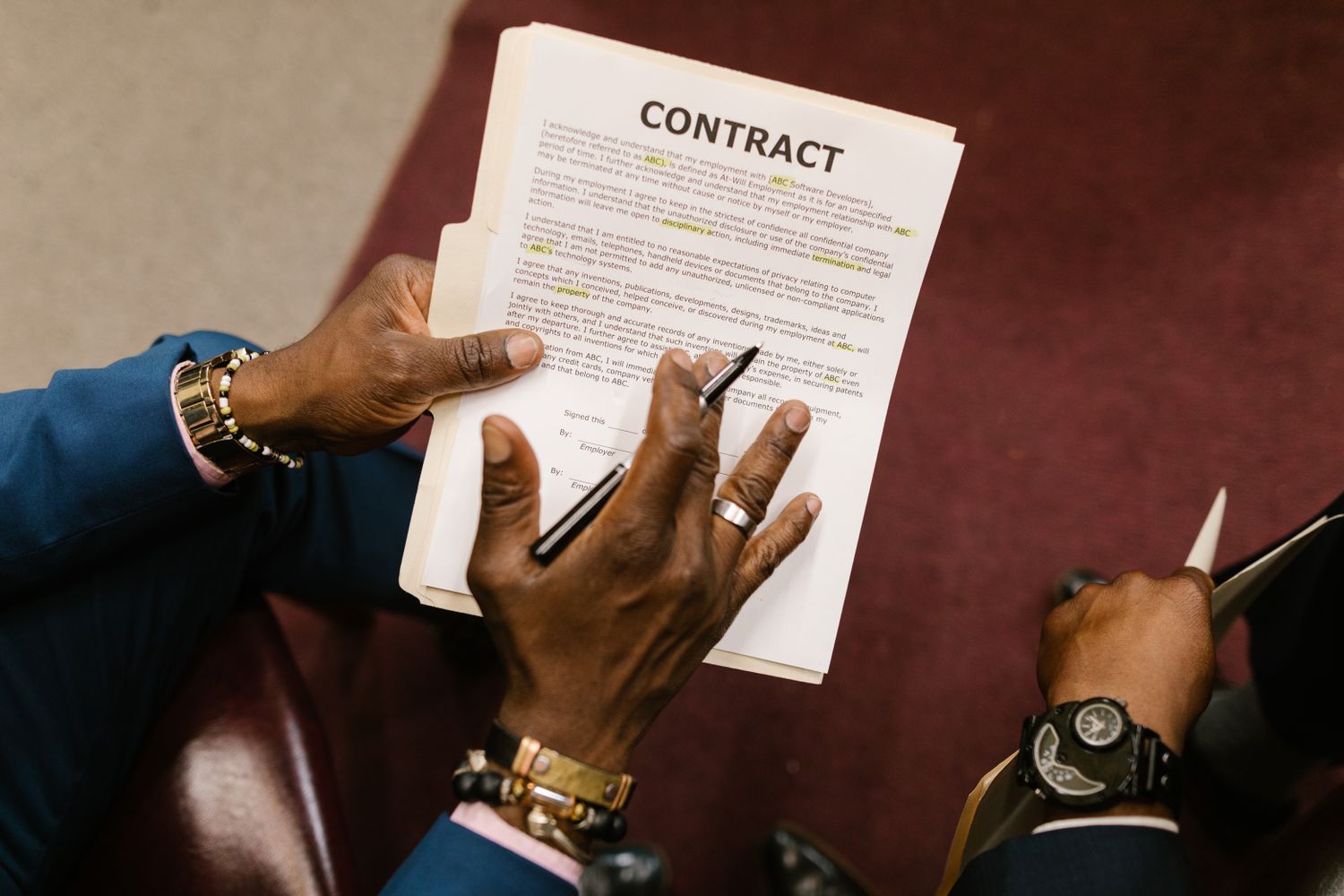
Business owner signing a contract as part of a business sale
Selling a business can create important CGT consequences

Selling a business is often the result of years of work. Before focusing only on the sale price, it is worth understanding how much of the resulting gain may actually be taxable. Division 152 contains four CGT concessions specifically for eligible small businesses.

01
There are four separate concessions The 15-year exemption, 50% active asset reduction, retirement exemption and small business rollover.
02
Eligibility comes first Being a small business does not automatically mean every asset sale qualifies.
03
The active asset history matters The asset generally needs to have been sufficiently connected with the operation of the business.
04
Planning before the contract is signed matters Ownership, connected entities, asset values and the transaction structure can affect the final result.

Small Business CGT

A business sale may create a gain — but the gross gain is not always the final taxable amount.

Capital gains tax can arise when a CGT event occurs in relation to a business asset. Depending on the transaction, that could include the disposal of business goodwill, property used in the business, shares, units or other CGT assets.

Eligible small businesses may then be able to access one or more of the small business CGT concessions. These concessions operate in addition to other CGT rules and, where applicable, can materially change the taxable outcome.

Business owners and advisers reviewing financial documents The sale structure and business records can affect the tax outcome
Important distinction Selling the business assets and selling shares in a company are not automatically the same tax transaction.

The CGT asset being disposed of matters. Different eligibility and additional conditions can apply depending on whether the transaction involves goodwill, individual assets, shares or interests in a trust.

Basic Conditions

Before choosing a concession, work out whether you qualify.

Division 152 contains a series of basic conditions that need to be considered before the small business CGT concessions can apply.

The precise pathway depends on the taxpayer, asset and business structure, but two of the most commonly discussed gateways are the small business entity turnover test and the maximum net asset value test.

01 Capital gain A relevant CGT event must result in a capital gain to which the concessions can potentially apply.
02 Small business entity pathway One common pathway involves being a small business entity with aggregated turnover below $2 million for the relevant income year.
03 $6 million net asset test Another common pathway is satisfying the maximum net asset value test immediately before the CGT event.
04 Active asset test The asset generally needs to satisfy the active asset requirements during the relevant test period.
05 Additional conditions Additional rules can apply to passively held assets, partnership assets, shares in companies and interests in trusts.
$6 Million Test The test is not simply the market value of the business being sold.

The maximum net asset value rules can require assets and liabilities of the taxpayer, connected entities and relevant affiliates to be considered. Some assets are excluded under the legislation.

Active Asset Test

The asset generally needs to have been genuinely connected with the business.

Broadly, an asset can be an active asset when it is used or held ready for use in the course of carrying on a business, or where an intangible asset such as goodwill is inherently connected with the business.

The timing test

  • If you have owned the asset for 15 years or less, it generally needs to have been active for at least half of the relevant test period.
  • If you have owned the asset for more than 15 years, it generally needs to have been active for at least 7.5 years during the test period.
  • The asset does not necessarily need to be active immediately before the CGT event.
  • Special rules can apply where the business has ceased before the asset is disposed of.
Rental Assets An asset whose main use is deriving rent can be excluded from active asset treatment.

Property situations can be particularly fact dependent, especially where a property is owned by one entity and used by another connected business.

The Four Concessions

Four different tools — four very different outcomes.

The concessions do not all work the same way. One can disregard an entire eligible gain, another reduces a gain, another provides a lifetime exemption amount, while the rollover generally defers the gain rather than permanently eliminating it.

01

Small Business 15-Year Exemption

Where all relevant conditions are satisfied, the eligible capital gain can be disregarded entirely. This is the most complete concession because the gain itself is exempt rather than simply reduced or deferred.

Ownership The CGT asset generally needs to have been continuously owned for at least 15 years.
Individual condition For an individual, the person is generally at least 55 and the event occurs in connection with retirement, or the person is permanently incapacitated.
Effect The qualifying capital gain is disregarded.
$500,000 cap? No. The $500,000 lifetime limit belongs to the retirement exemption, not the 15-year exemption.
02

Small Business 50% Active Asset Reduction

If the basic conditions are satisfied, this concession generally reduces the remaining eligible capital gain by 50%.

Reduction 50% of the relevant remaining capital gain.
Lifetime limit No general lifetime dollar limit applies to this reduction.
Companies Companies cannot generally access the ordinary individual/trust 50% CGT discount, but may still qualify for this small business active asset reduction.
03

Small Business Retirement Exemption

This concession can allow an eligible individual to disregard capital gains up to a lifetime limit of $500,000.

Lifetime limit $500,000 for each individual, reduced by amounts previously used under the concession.
Under age 55 Where the relevant individual is under 55 just before the choice is made, the required amount must generally be paid to a complying superannuation fund or RSA.
Must you actually retire? Despite its name, the retirement exemption does not itself require the individual to retire.
04

Small Business Rollover

The small business rollover can defer all or part of an eligible capital gain. It is a deferral mechanism, not automatically a permanent exemption.

Immediate effect All or part of the eligible gain may be deferred.
Replacement period Generally begins one year before and ends two years after the relevant CGT event period.
Future events A further CGT event can arise where replacement asset requirements are not satisfied or later cease to be satisfied.
Business owner reviewing financial documents before a sale

Don't Select A Concession In Isolation

More than one concession may potentially apply to the same gain.

The best result depends on which concessions are available, the taxpayer's entity type, capital losses, eligibility for the general CGT discount, previous use of the retirement exemption and plans after the sale.

How The Calculation Can Flow

The order can change the amount that remains taxable.

If the 15-year exemption applies, the qualifying gain can be disregarded without first applying capital losses or the CGT discount.

If it does not apply, a typical calculation may involve capital losses first, then the general CGT discount where available, followed by the small business concessions that remain available.

01 Work out the capital gain Determine the gain arising from the relevant CGT event.
02 Consider the 15-year exemption If all conditions are satisfied, the eligible gain may be disregarded entirely.
03 Apply relevant capital losses Where the 15-year exemption does not apply, capital losses are generally applied before the CGT discount.
04 General CGT discount Eligible individuals and trusts may be able to apply the general CGT discount.
05 50% active asset reduction The remaining qualifying gain may then be reduced under the small business active asset concession.
06 Retirement exemption and/or rollover Further qualifying amounts may potentially be exempted or deferred.

Simplified Illustration

Example of a gain being progressively reduced

Capital gain $400,000
Less capital loss − $20,000
Remaining $380,000
50% general CGT discount, if eligible $190,000
50% small business active asset reduction $95,000
Remaining before any retirement exemption or rollover $95,000

This is a simplified illustration only. Actual calculations depend on ownership, asset type, entity structure, eligibility, capital losses and the concessions chosen.

Company & Trust Interests

Selling shares or units can introduce another layer of eligibility tests.

Where the CGT asset being sold is a share in a company or an interest in a trust, additional conditions can apply. These rules are particularly important where the owner is selling equity rather than the company itself selling its underlying business assets.

Significant individual test

An individual is generally a significant individual in a company or trust where their small business participation percentage is at least 20%. The percentage can be held directly or indirectly.

  • Voting rights can be relevant for company interests.
  • Rights to income and capital distributions can also matter.
  • Interests held through interposed entities may need to be traced.
  • Different additional conditions can apply depending on the concession being claimed.
Business owners reviewing and signing sale documents The legal structure of the transaction can change the tax analysis

Exit Planning

Start reviewing the CGT position before the sale becomes irreversible.

A business owner who starts considering CGT only after signing a sale agreement may have fewer options available. Good exit planning begins with understanding the existing structure rather than trying to manufacture an outcome at the last minute.

01 Identify what is being sold Goodwill, business assets, property, shares and trust interests can produce different CGT considerations.
02 Review asset ownership Confirm which individual, company, trust or partnership legally owns the relevant CGT asset.
03 Document active asset history Establish when and how the asset has been used in the course of carrying on the business.
04 Review aggregated turnover Connected entities and relevant affiliates may affect the turnover calculation.
05 Calculate net asset value Determine whether the $6 million maximum net asset value test may be satisfied.
06 Check previous concessions Previous use of the retirement exemption can reduce the remaining lifetime limit.
07 Consider retirement timing Age and retirement circumstances are particularly relevant to the 15-year exemption and superannuation requirements under the retirement exemption.
08 Model the transaction Consider the likely tax outcome before comparing offers or finalising a sale structure.

Where Problems Arise

The concessions are generous, but they are not automatic.

  • Assuming every small business sale automatically qualifies.
  • Looking only at the value of the business and ignoring connected entities for the net asset test.
  • Failing to maintain evidence of the asset's active use.
  • Confusing the 15-year exemption with the $500,000 retirement exemption limit.
  • Assuming the word “retirement” means actual retirement is required for the retirement exemption.
  • Treating a rollover as a permanent tax exemption instead of a potential deferral.
  • Ignoring the additional tests where shares or trust interests are being sold.
  • Waiting until after the sale documents are executed to consider CGT planning.
Documentation A tax position is easier to support when the history is documented before the sale.

Keep ownership records, financial statements, valuations, entity information and evidence showing how the asset has been used throughout the relevant period.

Business Sale Checklist

Before signing the deal, check the tax position.

01 Identify exactly which CGT asset or assets are being sold.
02 Confirm the legal owner of each asset.
03 Calculate the expected capital gain before applying concessions.
04 Review the $2 million aggregated turnover pathway.
05 Review the $6 million maximum net asset value test where relevant.
06 Confirm whether the asset satisfies the active asset test.
07 Check additional share or trust interest conditions where applicable.
08 Consider whether the 15-year exemption could apply.
09 Check any remaining retirement exemption lifetime limit.
10 Consider whether a rollover aligns with plans after the sale.
11 Review the transaction before signing the final sale agreement.
Business owner reviewing financial reports before making a major decision

Finance in Life

Selling a business is both a commercial and tax decision.

The sale price is only one part of the outcome. Business structure, ownership, active asset history and eligibility for CGT concessions can all affect the amount remaining after tax.

Small Business CGT FAQs

Common questions when selling a business.

The four concessions are the small business 15-year exemption, the 50% active asset reduction, the small business retirement exemption and the small business rollover. Each has different conditions and tax effects.
No. Where the conditions for the small business 15-year exemption are satisfied, the qualifying capital gain can be disregarded entirely. The $500,000 lifetime limit relates to the small business retirement exemption.
The small business retirement exemption does not itself require you to stop working or retire. However, where the relevant individual is under 55, superannuation payment requirements generally apply.
Broadly, the test considers whether the relevant asset has been sufficiently used or held ready for use in carrying on a business during the required part of the ownership period.
Not necessarily. The rollover generally defers all or part of an eligible capital gain. Further CGT consequences can arise depending on what happens with replacement or improved assets and whether the rollover conditions continue to be satisfied.
Ideally, review the CGT position before the transaction structure and sale documents are finalised. Asset ownership, valuations, active asset history and entity relationships can all require time to properly analyse.
General Information

This article provides general information only and does not take into account your individual circumstances. Small business CGT concession eligibility can depend on asset ownership, business structure, connected entities, affiliates, asset values, turnover, active asset history, the CGT event and additional legislative conditions. Obtain advice relevant to your circumstances before completing or restructuring a business sale.

Planning A Business Sale?

Understand the tax position before you sign the deal.

Contact Finance in Life if you are considering selling a business or business asset and need help understanding how the CGT rules may apply to your circumstances.